
Before implementing solutions, it’s essential to understand the causes of storage inefficiencies. Many facilities struggle with outdated layouts, underutilized vertical space, excessive worker travel time and storage systems that are unsuitable for today’s inventory demands.
Without warehouse workflow optimization, businesses experience higher labor costs, slower order fulfillment, increased safety risks and difficulty scaling operations. Addressing these issues requires a holistic approach that combines layout planning, storage technology and workflow improvements.
Warehouse Space Optimization Strategies That Deliver Results
One of the most effective warehouse space optimization strategies is maximizing vertical storage. Many facilities use only a fraction of their available ceiling height, leaving valuable cubic space unused. High-density, vertical storage solutions allow businesses to increase warehouse storage capacity without expanding their footprint. These systems consolidate inventory into a smaller area while maintaining accessibility and organization.
Other proven strategies include:
- Reconfiguring aisles to reduce wasted space
- Grouping inventory based on pick frequency
- Standardizing storage locations to support faster retrieval
Together, these methods support warehouse layout and storage optimization while improving overall operational flow.
Choosing the Right Storage Systems for Space Efficiency
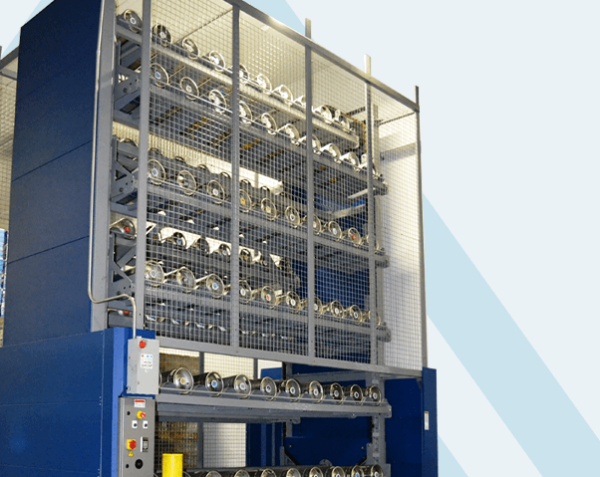
The best storage systems for maximizing warehouse space depend on inventory type, order volume and workflow requirements. Static shelving and pallet racking may work for low-velocity items, but they often fall short when efficiency and density are priorities. Modern warehouse storage solutions, such as vertical carousels, provide compact storage and automatically deliver inventory to ergonomic access points. This dramatically reduces walking time, improves accuracy and supports industrial storage efficiency across multiple industries.
Improving Productivity Through Warehouse Workflow Optimization
Storage efficiency also involves considering how employees interact with storage solutions. Effective warehouse workflow optimization minimizes unnecessary movement and simplifies picking processes. Automated and semi-automated systems reduce reliance on forklifts and ladders, helping businesses improve warehouse efficiency while supporting lean operational goals.
By bringing items directly to the operator, facilities can process more orders with fewer labor hours. This efficiency directly supports goals to reduce labor costs in warehouse operations while improving throughput and consistency.
Safety as a Core Component of Storage Efficiency
You must integrate any effort to improve warehouse safety and storage practices into storage planning. Inefficient layouts often lead to overcrowded aisles, unsafe lifting practices and increased accident risk.
Vertical and automated storage systems improve safety by:
- Eliminating high-reach picking
- Reducing forklift traffic
- Providing controlled, ergonomic access to inventory
Incorporating safety into storage planning is a key driver of sustainable efficiency and workforce retention.
Warehouse Organization Best Practices for Long-Term Efficiency
Maintaining efficiency over time requires discipline and consistency. Following proven warehouse organization best practices helps facilities avoid slipping back into inefficiency as inventory grows or changes.
Best practices include:
- Clearly labeled storage locations
- Logical zoning based on usage frequency
- Standard operating procedures for inventory placement
- Regular audits to identify underutilized space
These fundamentals support warehouse workflow optimization and ensure that investments in storage systems continue delivering value.
Measuring Warehouse Storage Solution ROI
To justify improvements, businesses must effectively measure the return on investment (ROI) of warehouse storage solutions. ROI primarily considers floor space savings, but you should also look at labor reductions, safety improvements and operational scalability.
Key metrics to evaluate include:
- Labor hours per order
- Storage density in items per square foot
- Order accuracy and fulfillment speed
- Reduced injury incidents
When viewed holistically, storage optimization often delivers measurable returns faster than anticipated.
Tips for Efficient Warehouse Operations
For organizations seeking to maximize warehouse storage efficiency, the answer lies in combining strategy with the right technology. From layout planning to automation, every improvement should support long-term growth and adaptability.
These tips can help guide decision-making:
- Prioritize vertical space utilization
- Invest in scalable storage systems
- Design layouts around workflows
- Balance efficiency with safety and ergonomics
Facilities that apply these principles consistently are better positioned to handle growth, reduce costs and maintain operational control.
Why Work With Summit Storage Solutions?
Summit Storage specializes in space-efficient, vertically oriented storage systems designed to solve real warehouse challenges. Our solutions are made in the USA, customizable to your facility, and supported by a dedicated installation team. Whether you’re evaluating carousel storage systems for warehouses or looking to modernize existing operations, we help businesses turn unused space into measurable performance gains.
Improve Your Warehouse Storage Efficiency Today
If you’re ready to move beyond theory and implement proven solutions, Summit Storage can help you identify the right system for your facility. Contact our team to discuss your layout, inventory needs and efficiency goals and take the next step toward smarter warehouse operations.